

Table of Contents
Logo Design – Between Idea and Reduction
After the module on Layout & Editorial Design, the next section of my studies at the OfG / Online School for Design focused on a topic that seems smaller at first glance but is significantly more demanding: Logo Design.
While a magazine cover can work with images, colors, and typography, a logo has to make do with much less. A good logo works in both small and large sizes, in color and black and white, digitally and in print.
This reduction to the essential was the greatest challenge for me.
The Task: Two Topics to Choose From
For the monthly assignment, there were several topics to choose from, and these two appealed to me the most:
- Coffee Cats
- Architecture & Design
I initially decided on Coffee Cats. The combination of cats and coffee seemed creative, playful, and offered many design possibilities.
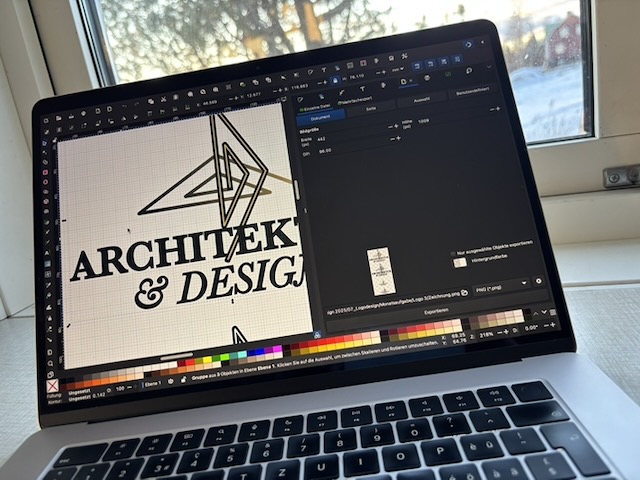
I started with initial sketches, experimenting with shapes, cups, cat silhouettes, and typographic ideas.
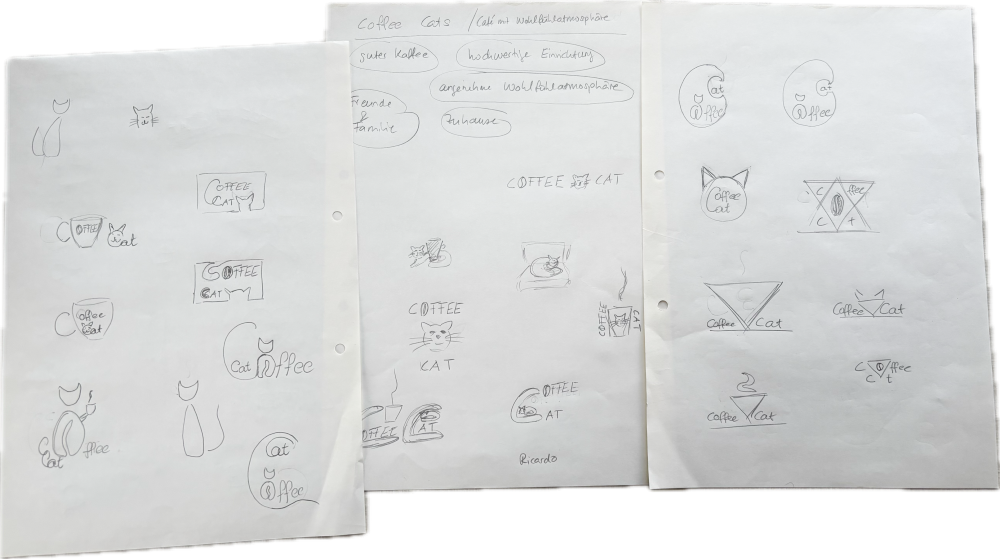
Yet, despite various approaches, I quickly realized that the ideas didn’t feel coherent. There was no “spark”. Sometimes, you realize while designing that a topic might sound interesting but doesn’t fit your own design approach. That’s exactly what happened here.
Therefore, I decided to switch topics and continue with Architecture & Design.
The Creative Process
For the theme Architecture & Design, I wanted to connect structure, design, and nature. At the same time, my current environment in Sweden also played a role in my considerations.
I thought of typical Swedish wooden houses, clear architectural forms, and the nature that is omnipresent here. Birches especially came to mind—as they shape the landscape in many places.
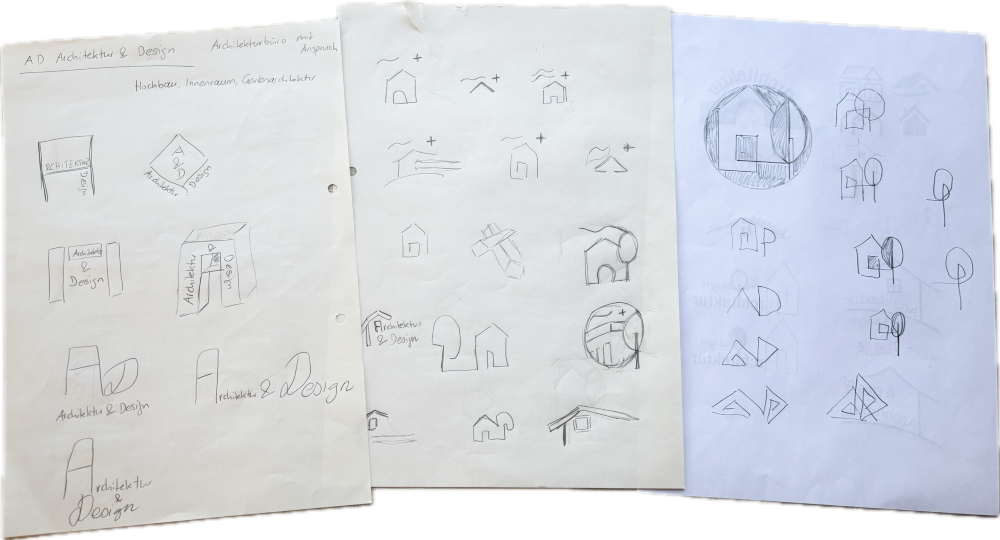
This combination of architecture and nature felt coherent to me. It not only suited the theme but also my personal connection to the place. Further ideas included:
- Houses and architectural forms
- Lines and grids
- Natural elements like birches or trees
- Typographic combinations with “&”
I deliberately explored many directions to find out what works—and what doesn’t.
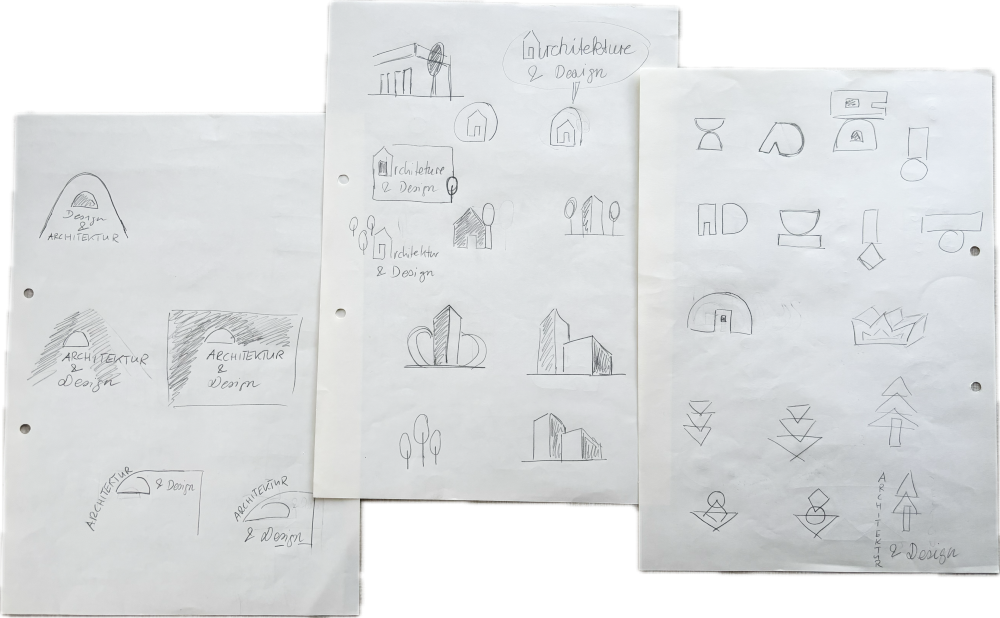
It quickly became apparent that I was thinking too complexly. Instead of simplifying, I tried to pack multiple ideas into one logo simultaneously.
A typical learning process in logo design.
Logo Design 1 – Good Idea, Too Many Elements
The first draft combined a Swedish house with a birch tree. This combination fit well with the theme of Architecture & Design and also reflected my personal connection to Sweden.
The choice of colors also arose from this context: I mainly worked with shades of red, green, and yellow. The red accents were inspired by the classic Swedish wooden houses that shape the landscape in many places. Green represented nature and the birch, while the yellow tones were meant to add extra warmth and vibrancy to the design.
However, by combining multiple colors, different areas, and also adding an enclosing circular element, the logo quickly became cluttered. The circle also compressed the elements together, leaving them lacking the necessary space.
Additionally, the typography was very lively—too lively. The large “&” sign in particular dominated too much, taking attention away from the actual motif.
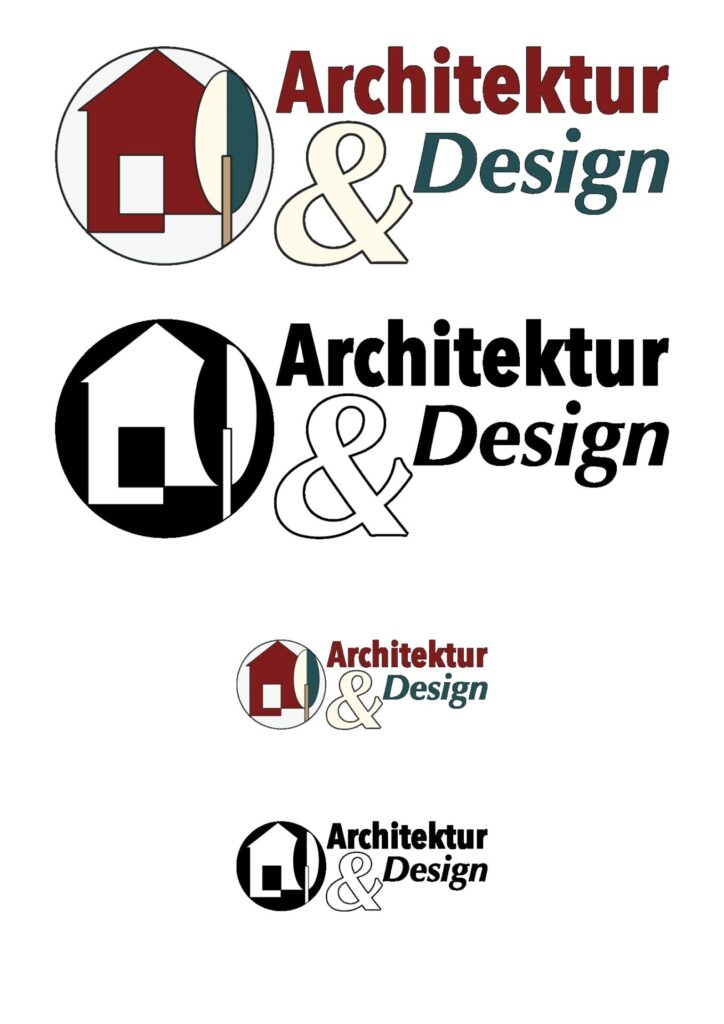
Looking back, I see that the basic idea was good—but I wanted too much at once.
Logo Design 2 – When Design Becomes Overloaded
In the second draft, I intended to work in a more simplified manner.
I developed an elongated house shape and combined it with colored areas.
However, during the implementation, I got carried away by the design possibilities in Inkscape. I experimented with additional effects, including hatching, which I initially found quite “pretty” and integrated as a design detail.
But this highlighted a typical challenge in the design process: Just because something is technically possible doesn’t automatically mean it benefits the design. Instead of becoming calmer, the logo became even more cluttered. The coloration, hatching, borders, and backgrounds competed with each other. The symbol was there but difficult to recognize.
Again, it became apparent: Too many elements lead to chaos.
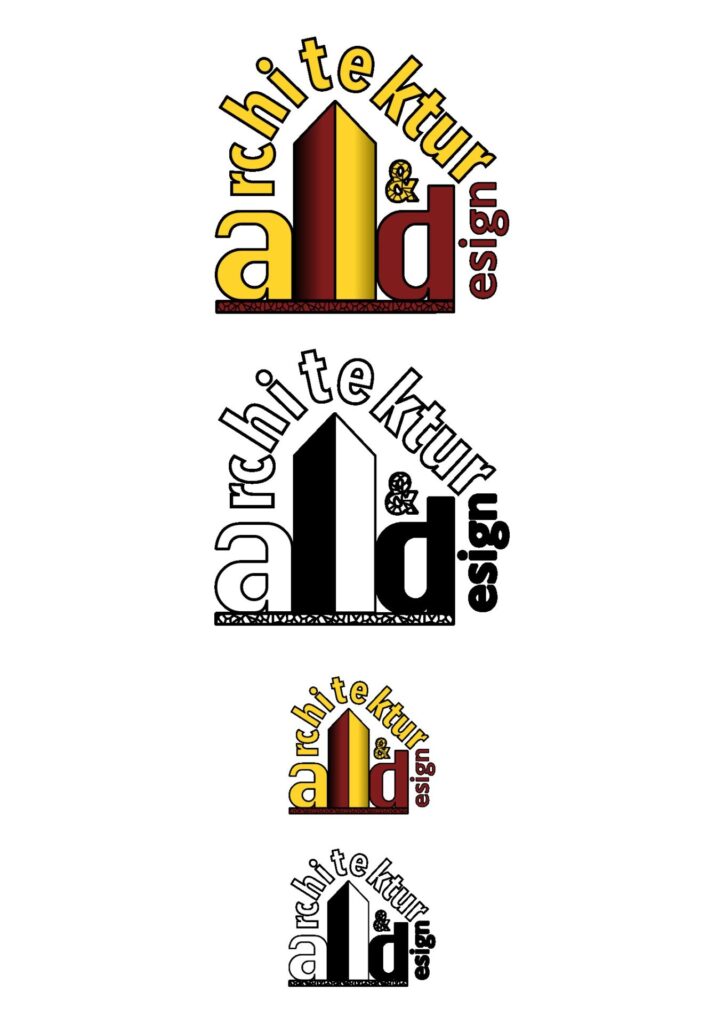
Looking back, this design was particularly instructive. I realized how quickly one can be tempted by new tools and effects—and how important it is to keep the focus on the main task: developing a clear, concise logo.
Logo Design 3 – More Calmness, More Clarity
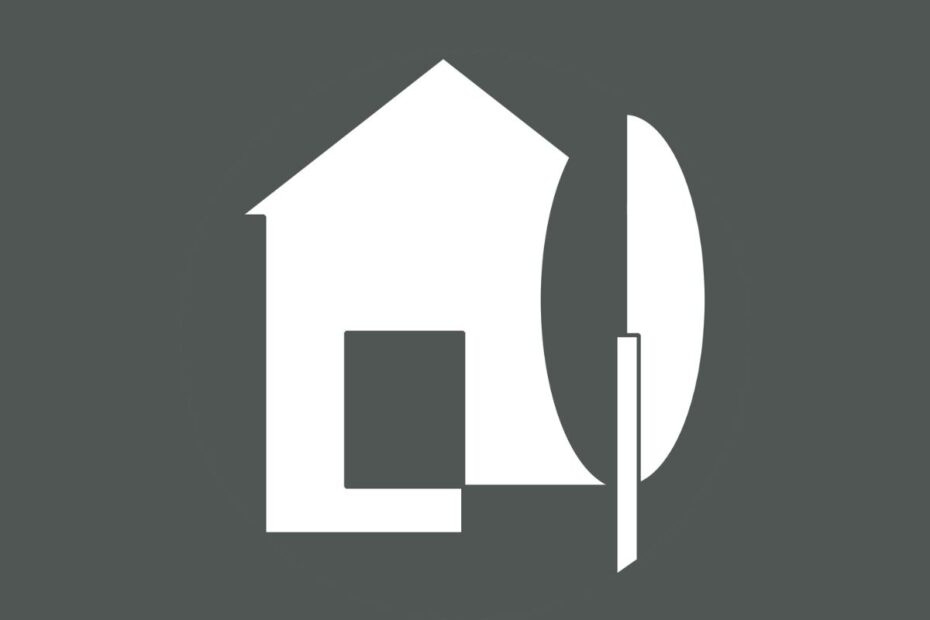
The third draft took a calmer direction. The design became clearer, and the elements were more reduced.
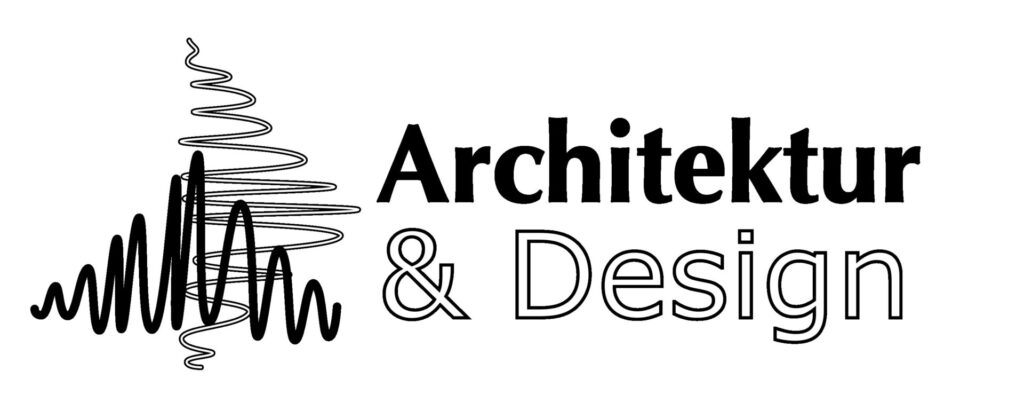
Nevertheless, there was still room for improvement: Typography and symbols overlapped too much. A logo needs space to have an impact.
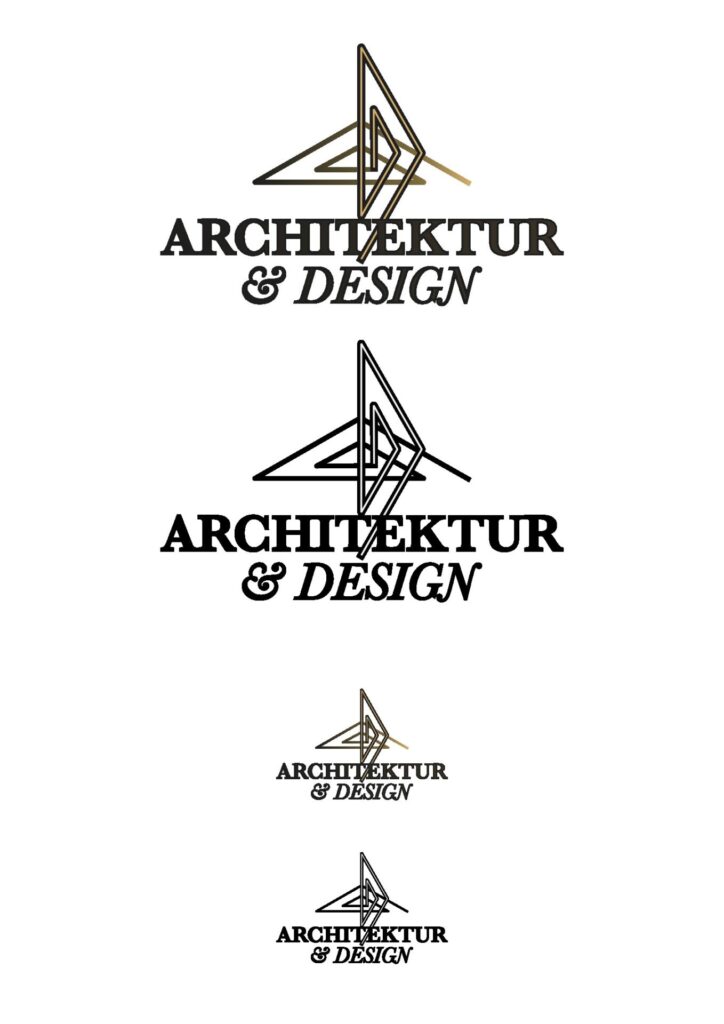
This realization was an important learning moment for me.
What I Learned from the Feedback
The feedback on the task was constructive—and honest. It clearly showed me what I still need to work on:
Particularly important for me was the advice to consolidate my ideas more. I had many good approaches—but not enough focus.
Why I Found Logo Design More Challenging
Compared to layout or editorial design, one important factor is missing in logo design: you can’t hide behind many design elements. A logo must be simple, clear, flexible, and recognizable. This means every decision becomes visible.
And that’s precisely what made this task challenging—but also particularly instructive.
My Conclusion
This module changed my perspective on design. I learned:
Even though the feedback wasn’t entirely positive, it was exactly what I needed. Because it is precisely in the challenges that the greatest learning progress occurs.
Outlook
I am currently in the final month of my OfG studies and am consciously taking time to reflect on the past modules and prepare for the completion.
The logo design module, in particular, has changed my perspective on design. The idea of reduction has also influenced other projects, including the relaunch of my own website, which I have intentionally designed to be calmer, clearer, and more focused.
With the knowledge from this module, I am taking away one main lesson:
Less is often more—but knowing what to leave out is the real art.
This realization will accompany me beyond graduation.
If you have questions about my learning process or about logo design, I would be happy to discuss them.
●